
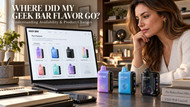
Geek Bar Flavor Availability: Why Favorites Disappear
Posted by Sam JR on 13th Oct 2026
WARNING: This product contains nicotine. Nicotine is an addictive chemical. For adults 21+ only.
Written by YummyPuffs Editorial Team | Published October 13, 2026 | Approximately 7-minute read
You've seen the name before. You remember the brand, the packaging, and maybe even the exact words printed on the box.
But when you look for it again, the listing seems to have disappeared.
Did the manufacturer stop making it? Did the store run out? Or is the same flavor name now associated with a different device?
Questions about Geek Bar flavor availability can be surprisingly difficult to answer because a manufacturer, a product family, and a retailer's inventory are three separate things.
And with Geek Bar offering multiple device collections, a familiar flavor name doesn't necessarily appear under every model.
The interesting part is that a missing product listing can have several explanations—and not all of them mean the product has been discontinued.
Quick Answer: A Geek Bar flavor may be difficult to find because retailer inventory changes, different Geek Bar models have different flavor selections, product pages are reorganized, or a particular variation is no longer offered. An unavailable listing does not independently prove that Geek Bar discontinued the flavor. Confirm the full model and flavor name, then look for an official manufacturer announcement when checking discontinuation claims.
The Difference Between a Flavor and a Device
Let's begin with something easy to overlook.
Geek Bar is the brand.
Pulse, Pulse 2, Pulse X2, and Burj are examples of product families.
A flavor name identifies a particular variation offered within a product family.
Those three pieces of information work together, but they aren't interchangeable.
A customer may remember a flavor name without remembering which Geek Bar model carried it.
That can create confusion when looking through a catalog containing several generations.
The same flavor name may appear in more than one collection, or a particular model may have a different selection entirely.
For that reason, searching by brand and flavor name alone may not identify the exact item someone remembers.
Why a Geek Bar Flavor Might Be Missing From One Model
Manufacturers don't necessarily release identical flavor selections across every product family.
One generation may have a particular collection of variations.
A newer family may introduce additional names, retain some familiar options, or use a different selection.
The exact lineup is a product-specific decision.
This means a flavor appearing in a Geek Bar Pulse listing should not automatically be assumed available for Pulse X2, Clio Platinum, or Burj.
Even when those products belong to the same manufacturer, the variations can differ.
YummyPuffs' Geek Bar product collection shows how many product families now appear under the brand.
The collection includes integrated devices as well as separate kit-and-pod formats.
Those are distinct listings, not merely different colors of the same product.
Out of Stock Is Not the Same as Discontinued
This is probably the most important distinction in the entire story.
Out of stock generally means a retailer does not currently have a particular item available for sale through that listing.
Discontinued generally means a manufacturer has stopped producing or offering a particular product or variation.
Those statements describe different situations.
A retailer could temporarily run out of a product that the manufacturer still produces.
A store could stop carrying a specific variation while other stores continue listing it.
A manufacturer could also retire a product generation, leaving older inventory or archived photographs online.
An empty inventory message doesn't establish which situation applies.
Without confirmation, describing a product as discontinued can mislead readers.
Why Different Stores Show Different Geek Bar Selections
Imagine two stores selling products from the same electronics manufacturer.
One carries several older models.
The other focuses on newer releases.
Both can legitimately have different catalogs.
Electronic nicotine-product retailers also make individual inventory decisions.
Their listings may reflect availability, distribution arrangements, product generations, shipping restrictions, and other business circumstances.
As a result, a variation appearing at one retailer may be absent from another.
That difference doesn't establish which store has a more complete representation of everything the manufacturer has ever released.
It only shows what each retailer has chosen or is able to list.
The broader Geek Bar catalog and an individual store's inventory are not the same thing.
What Happens When Geek Bar Releases a New Generation?
When a manufacturer introduces a new product family, it has several decisions to make.
Should it carry forward familiar names?
Should it create a separate selection?
Will earlier devices remain in the lineup?
Those questions are part of product development and catalog management.
There's no universal rule requiring a brand to use identical variations across successive generations.
That's why remembering only the flavor may not be enough to locate the exact product.
The device family provides another important piece of information.
For example, YummyPuffs maintains an existing Geek Bar lineup guide explaining the distinct model families.
That article covers the products themselves.
Here, the question is what happens to the availability and visibility of individual variations as those families change.
Why an Older Product Page Might Still Exist
Here's a curious feature of online shopping.
A product can remain visible in search results long after a store stops actively promoting it.
A previously published page may still be indexed by search engines.
Photographs can remain in older blog articles.
An archived listing may preserve the original product name.
None of these things automatically proves that the item is currently available.
Historical product pages can still be useful because they document how a manufacturer described an earlier release.
But their date and current status matter.
A listing published two years ago should not be treated as a live stock confirmation simply because it appears in search results today.
Could the Same Flavor Have a Slightly Different Name?
Sometimes products have names that look similar without being identical.
Consider how manufacturers use terms such as Ice, Icy, Mint, Sour, or Blue Razz.
Small wording differences can identify different products.
A flavor with one additional word in its name should not automatically be treated as a renamed version of another.
There could be a genuine difference in the manufacturer's description.
Likewise, two names that sound similar may belong to separate collections.
This isn't unique to Geek Bar.
Food companies, beverage makers, and other consumer brands regularly use closely related naming conventions across products.
The full printed variation name remains important.
What About Special Geek Bar Editions?
Geek Bar has also appeared in retailer catalogs through specially named editions.
YummyPuffs' Geek Bar collection includes listings associated with names such as Savers and Mintz.
An edition can introduce another level of product identification.
Now there may be a manufacturer name, a device family, an edition name, and a variation name.
This can make a product harder to identify from memory, especially when someone remembers the exterior artwork more clearly than the complete title.
But an edition name doesn't automatically mean the item is permanently limited, discontinued, or produced in a particular quantity.
Those claims require supporting manufacturer information.
The name tells you how the product is presented; it doesn't establish its entire production history.
Why Product Photographs Can Create Confusion
Imagine seeing a familiar-looking Geek Bar in a search result.
The colors seem right.
The body looks familiar.
But the product title identifies a different generation.
Should the photograph or the name determine what the item is?
Ideally, both should agree.
A current listing should use images representing the actual model and variation described.
An older photograph may show a previous design, while the current page uses an updated image.
Packaging styles can also change.
These situations are easier to understand when the retailer identifies the complete product name and uses accurate images.
A visual resemblance alone isn't enough to establish that two listings contain the same item.
Why Search Engines Can Show Older Flavor Pages
Search engines don't function as live inventory databases for every retailer.
They discover and index web pages, which may remain visible even after the information changes.
A search result can also show a title or description that was generated from an earlier version of a page.
That means a product name appearing in search doesn't guarantee current availability.
The retailer's live page provides more relevant information about its own inventory.
And even that live page cannot confirm the manufacturer's overall production status unless it includes reliable supporting information.
It's useful to keep those different sources separate.
When a Favorite Flavor Is Listed Under Another Product Family
This is where exact wording matters most.
A familiar flavor name may appear across more than one device family.
But that doesn't automatically mean the products contain identical formulations or use identical hardware.
Each model may have different construction, airflow arrangements, and other specifications.
The manufacturer's published description is the appropriate source for identifying the product.
A name alone cannot establish that two variations will be identical in every respect.
And a retailer shouldn't treat related names as interchangeable without documentation.
What Does a Brand Category Actually Tell You?
A brand category is designed to organize a retailer's listings under one manufacturer.
For example, the Geek Bar collection at YummyPuffs contains several distinct product families.
That organization makes the relationship between the items clearer.
But the category itself is not a complete record of every product Geek Bar has ever manufactured.
Nor is it a guarantee that every listed variation is presently available.
An online vape shop may add, update, or remove product listings as its catalog changes.
A useful category page helps readers identify the different models without implying that all generations share identical specifications or flavor selections.
Does a Missing Listing Mean the Product Was Unpopular?
No.
That's another conclusion worth avoiding.
A product can disappear from a retailer's inventory for many reasons unrelated to customer demand.
The store may have changed its selection.
A distributor may no longer supply that specific variation.
The manufacturer may have introduced a new generation.
Or the product page might simply be temporarily unavailable.
Without reliable sales and inventory information, there's no basis for identifying the reason.
Similarly, a product being listed on several websites doesn't establish how many units have been sold.
Availability and popularity are different kinds of information.
What Information Is Useful When Identifying an Older Geek Bar?
When someone wants to understand an older listing or determine whether two product names refer to the same item, a few details are especially helpful.
The full device-family name provides one clue.
The exact flavor wording provides another.
A photograph of the original retail packaging can help identify the generation.
And the publication date of an article or listing can establish the approximate period being discussed.
Those pieces of information don't guarantee a definitive answer.
But they provide better context than relying on memory of the brand name alone.
When to Trust a Discontinuation Announcement
A manufacturer announcement is more persuasive evidence of discontinuation than an empty product listing.
An official notice may identify a particular model, variation, or region.
However, even official announcements should be read carefully.
A product discontinued in one market may not have the same status elsewhere.
A statement about one generation doesn't necessarily apply to every other product made by the brand.
And a retailer removing a listing isn't automatically a manufacturer announcement.
Accurate interpretation depends on exactly what the source says.
Why This Matters Beyond Geek Bar
Geek Bar is our example, but the same general pattern appears throughout consumer electronics.
A camera lens may disappear from one store while remaining available elsewhere.
A headphone color may be absent from a retailer's current collection.
A phone manufacturer may change the available finishes between generations.
These situations all involve the distinction between product identity, manufacturer decisions, and individual retail availability.
Understanding that distinction makes online catalogs easier to interpret.
It also prevents temporary inventory changes from being mistaken for permanent decisions about a product.
Frequently Asked Questions
Why can't I find a Geek Bar flavor I saw before?
Possible explanations include retailer inventory changes, differences between model lineups, archived pages, or a variation that is no longer offered. The exact reason requires confirmation.
Does out of stock mean Geek Bar discontinued it?
No. An out-of-stock message refers to a retailer's current availability and doesn't independently establish the manufacturer's production status.
Do all Geek Bar models offer the same flavors?
No. Different Geek Bar product families can have different selections.
Can an older Geek Bar flavor return?
That depends on manufacturer decisions and retailer availability. An older listing doesn't establish whether a return is planned.
Why do two Geek Bar flavors have similar names?
Manufacturers sometimes use related naming conventions across separate variations. Similar names shouldn't automatically be treated as identical products.
Does a special edition always mean limited production?
No. The edition name alone doesn't establish the number of units produced or a specific discontinuation date.
Can a search result show a product that is no longer available?
Yes. Search engines may continue displaying indexed product pages even after retailer information changes.
Is an unavailable flavor necessarily unpopular?
No. Availability alone does not establish customer demand or sales performance.
A Missing Listing Doesn't Tell the Whole Story
A familiar Geek Bar flavor disappearing from one store's catalog can seem mysterious.
But the explanation may be much simpler than a permanent product discontinuation.
Retail inventory changes. Manufacturers release different collections. Product names evolve, and search engines may continue showing older information.
The key is to distinguish what a retailer currently lists from what the manufacturer has officially announced.
That turns an uncertain search result into a question we can investigate using actual product information rather than assumptions.
YummyPuffs Editorial Team
Published by YummyPuffs, sharing educational information about vape brand catalogs, product naming, and retail availability for adults aged 21 and older.